
God’s Faithful Presence Through All Our Days: Ancient Insights for an Enduring Faith
A revised version of a sermon by Rev. Chijioke Agbaeze at First United Presbyterian Church of Little Falls, NY on May 3, 2026.
“Listen to me, you descendants of Jacob, all the remnant of the people of Israel, you whom I have upheld since your birth, and have carried since you were born. Even to your old age and gray hairs I am he, I am he who will sustain you. I have made you and I will carry you; I will sustain you and I will rescue you.” (Isaiah 46:3-4; NIV)
Introduction
How do you know you are getting older?
Maybe your knees tell you before your alarm clock does. Or bending down now requires planning—and prayer. Or do you walk into a room and forget why you went there? Or maybe you keep things, and don’t remember where you kept them.
The Bible presents aging as a natural, God-ordained process, and often associating long life with blessing, wisdom, and a “crown of splendor” (Proverbs 16:31).
The wisdom from multiple age-long experiences is not without scars, and our bodies are certainly not without wear and tear. These are natural, inevitable deterioration of the body, and not just because of neglect, abuse, or accident. As Paul reminds us, creation itself groans (Romans 8:22), and our bodies are part of that groaning creation.
Therefore, gray hairs and wrinkles on our bodies are not just signs of age; they can also be signs of a life walked with God. Every wrinkle can represent a season where God was faithful, and every gray hair a testimony to a storm survived by his grace.
The physical signs of aging—such as wrinkles, scars, and graying hair—can be reframed as “badges” of a life well-lived rather than flaws to be concealed.
This perspective to aging echoes wabi-sabi, a Japanese aesthetic and philosophical worldview that finds beauty in imperfection, impermanence, and incompleteness.
Wabi-sabi promotes finding joy in the natural, weathered, and simple aspects of life; the art of appreciating flaws and transience. Wabi originally implied the agony of lonely life, but evolved to mean rustic simplicity, freshness, or quietness. It implies “less is more”. And sabi often described as “attentive melancholy” refers to the beauty or serenity that comes with age, wear, and visible marks of use.[1]
This is philosophy encourages embracing flaws, such as a crack in a ceramic vase, as part of an object’s history and beauty. And serves as a counterpoint to modern societal pressures that glorify eternal youth.
While acknowledging the physical decline we experience as we age, the Old and the New Testaments emphasize respect for the elderly, spiritual vibrancy in later years, and the purposeful legacy of a righteous life.
By purposeful legacy here, I mean living with intentionality to leave behind an enduring impact of character, faith, and moral values rather than merely material wealth. It is the conscious choice to walk in integrity, which acts as a “gentle torch” that guides and blesses future generations.
Background
In the Old Testament, long life is frequently framed as a reward for obedience and righteousness, with elders (or “gray hair”) honored as repository of experience, understanding, and wisdom (Job 12:12).
Figures like Abraham are described as living long and passing away at a “good old age” (Genesis 25:8). This is not just about longevity, but more about purposeful legacy. It indicates that he was “satisfied” with his life, having fulfilled God’s purpose, and died in peace.
And the Bible emphasizes leaving a spiritual legacy and sharing God’s power with the next generation (Psalm 71:18) just as Abraham did. He obeyed God, believed God, worshipped God, and was God’s friend. He left his country to a strange land on God’s command (Genesis 12:1-4) and was willing to offer up Isaac, his only son (Genesis 22:1-12).
The Bible says that ““Abraham believed God, and it was credited to him as righteousness” (Romans 4:3; NIV), and he was called God’s friend” (James 2:23; NIV).
Today, we continue to read about Abraham and learn from his legacy. And in Leviticus 19:32, God commands us to “stand up in the presence of the aged, show respect for the elderly and revere your God.” (NIV)This is a call to celebrate God’s sustaining grace. It is a call to honor the wisdom, faith, and witness of those who have journey long with God.
In the New Testament, old age is seen as a time for continued purposeful service (Luke 2:37), spiritual renewal (2 Corinthians 4:16), and mentorship (Titus 2:2-3).
Ultimately, in the words of the preacher, “…the dust returns to the ground it came from, and the spirit returns to God who gave it.” (Ecclesiastes 12:7; NIV)
Renewed and Sustained
The Apostle Paul had the right attitude on aging. He says,
“Therefore we do not lose heart. Though outwardly we are wasting away, yet inwardly we are being renewed day by day.” (2 Corinthians 4:16; NIV).
Furthermore, our text Isaiah 46, verse 4 reminds us that God’s presence carries us through every season of life—from youth to old age, through strength and weakness, joy and sorrow. He says, “I will sustain you.” (NIV)
A few chapters earlier, Isaiah 40:31 says,
“but those who hope in the Lord will renew their strength. They will soar like eagles; they will run and not grow weary, they will walk and not be faint.” (NIV)
And Paul in speaking to the Corinthians—whose hope is in the Lord—reechoed this promise as “…being renewed day by day.” (2 Corinthians 4:16; NIV).
The word “sustain” as used in our text is very interesting. To sustain means God holds what would otherwise fall. It implies keeping something in operation. And as a part of sustenance, the “daily renewal” which Paul talks about is needed.
Wabi-sabi fits beautifully with Isaiah 46:4, as both focus on the value of what is sustained through time. While the world often values things only when they are “new” or “perfect,” God’s grace—and the wabi-sabi aesthetic—finds the highest value in what has been weathered and kept.
Here are four things I want us to take out from the ancient insights of Isaiah 46:4 and the Japanese philosophy of wabi-sabi:
1. The “Patina” of Faith
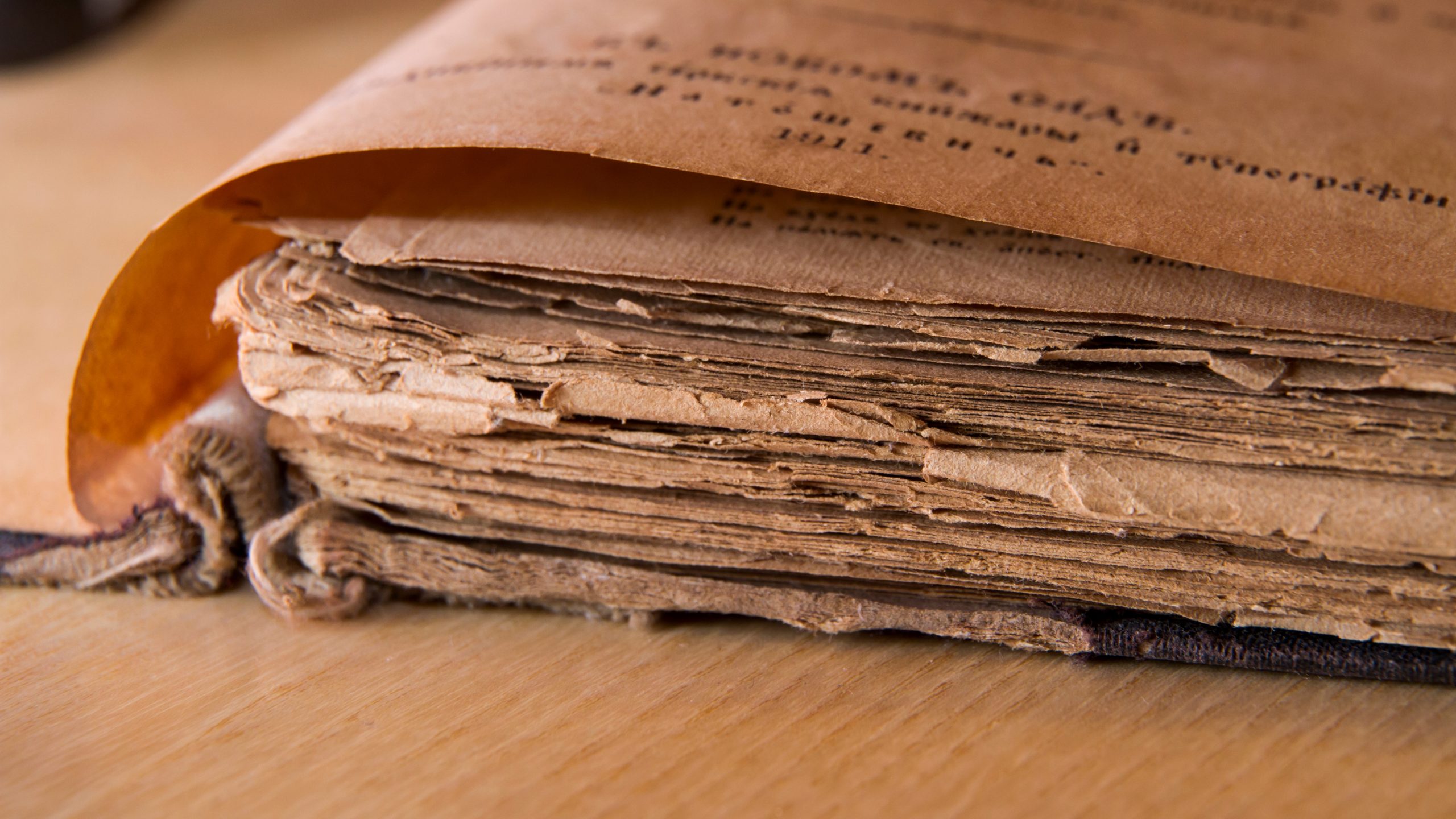
Patina is a concept in the ancient philosophy of wabi-sabi. You’ve likely seen it—it’s the soft glow on a well-handled silver spoon, the smooth, dark grain of an old wooden pew, or the way a leather Bible cover becomes soft and supple after years of being held.
A patina is not a stain or a layer of dirt; it is a ‘finish’ that only time can provide. It is the visible evidence of history and endurance. And it acts as a protective, aesthetic, and non-flaking coating that adds character, value, and a “vintage” look.[2] As it is said, brand-new objects have no history, but an older one has character.
In Isaiah 46:4, we see that God doesn’t just tolerate our aging; he values our ‘patina.’ Our gray hairs and the lines on our faces are the ‘patina of faith.’ They aren’t signs of fading; they are the beautiful, visible marks of a soul that has been handled by the grace of God through every storm and season.
A new vessel is shiny and perfect, but an ancient, weathered soul tells a story of a God who was present through it all.
2. Kintsugi: The Gold in the Cracks
The art of Kintsugi, repairing broken pottery with gold,[3] is the ultimate wabi-sabi metaphor for “Sustaining Grace.”
When a vessel breaks, we usually throw it away. But Kintsugi makes the vessel stronger and more valuable at the broken places.
As we age, our lives may have “cracks” from grief, illness, or hardship, but Isaiah 46:4 says, “I have made you and I will carry you.” (NIV)
God doesn’t discard us when we are “broken” by life; He weaves His faithful presence through those cracks like gold lacquer.
3. “I Am He”: The Constant in the Change
Wabi-sabi acknowledges that “nothing lasts” and “nothing is finished”[4] and teaches us to stop fighting the passage of time and start embracing it.
While our bodies change (impermanence), God’s promise does not: “Even to your old age… I am he” (Isaiah 46:4; NIV). He is the steady hand that holds the wabi-sabi vessel of our lives as it ages.
4. The Beauty of “Finished” vs. “Sustained”
Modern culture is obsessed with being “polished.” Wabi-sabi prefers the “rustic and simple.”
A seedling is pretty, but a gnarled, ancient oak tree is majestic because it has endured. Hence, a reason to celebrate adult seniors, their youthful productivity, and more importantly their enduring witness. Seniors are God’s masterpieces in progress.
Just as we admire the majesty of an ancient oak, we see in our elders an ancient beauty—a beauty not defined by a polished surface, but by the strength of a soul that has been sustained through the storms.
We don’t need to be perfect to be used by God; we just need to be present and sustained by his hand.
As aging is involuntary and a natural process, the strength which we need to keep going is also not our responsibility but the Lord’s. All we need, according to Isaiah, is hope.
“but those who hope in the Lord will renew their strength. (Isaiah 40:31)
“Therefore we do not lose heart. Though outwardly we are wasting away, yet inwardly we are being renewed day by day.” (2 Corinthians 4:16)
“Listen to me, you descendants of Jacob, all the remnant of the people of Israel, you whom I have upheld since your birth, and have carried since you were born. Even to your old age and gray hairs I am he, I am he who will sustain you. I have made you and I will carry you; I will sustain you and I will rescue you.” (Isaiah 46:3-4; NIV)
In other words, God is saying to us that he will strengthen, support, maintain, prolong, and keep us in operation even as we age in obedience and righteousness.
Conclusion
In summary, the Bible advises that rather than fearing old age, we should live intentionally, relying on God’s sustaining grace to remain fruitful in our final years.
It was a very elderly pair—Simeon and Anna—to whom God chose to introduce his son, confirming not only his promise of many years to the waiting Simeon (Luke 2:26), but also that God uses whom he chooses whatever their age.
Simeon and Anna remind us that waiting and wisdom are sacred gifts. And aging brings new ways of seeing—as God’s love grows deeper, not dimmer.
Hear the words of John Denver, an American country and folk singer, songwriter, and actor:
“Today is the first day of the rest of my life… To grow old is to change. To change is to be new. To be new is to be young again. I look forward to my growing old.”
[1] The Spirit of Japan Tours. (n.d.). Wabi-sabi, the Zen philosophy of life. Retrieved May 3, 2026, from https://spiritofjapantours.com/zen-philosophy-of-life/
[2] Martha Stewart Living Omnimedia. (2025, January 29). What is patina—and how does it differ from rust and tarnish? Martha Stewart. https://www.marthastewart.com/7973577/what-is-patina-versus-rust-tarnish
[3] Wabi-sabi. (n.d.). In Wikipedia. Retrieved May 3, 2026, from https://en.wikipedia.org/wiki/Wabi-sabi
[4] Ibid.
This message honors the 2026 Older Adult Week theme, “God’s Faithful Presence Through All Our Days,” established by the Presbyterian Church (U.S.A.) and the Presbyterian Older Adult Ministries Network (POAMN)